Archive for the 'Writing and Poetry' Category

Incomprensible Estancia

Posted in En Español, Writing and Poetry on May 11th, 2011 by Angel Villanueva

:: :: ::

La magnética bemol
se acerca en la cruel distancia
y llega hasta el corazón
lo llena con su substancia
con sus azares caprichos
con sus temores nostalgia
con opacidad y brillo
con amalgamada náusea
hoy te encuentro en las orillas
del cráter de las mañanas
en donde con tu luz brillas
con tus esperanzas vanas
cuántas veces te lo he dicho
me dijo algún día mi nana
que la gente es un peligro
y yo observaba sus canas
al caminar por las noches
me desespero y me atacan
estos inciertos temores
esta risa demoníaca
hoy te encuentro en las aldeas
hoy te persigo en las faldas
de las montañas ardientes
de las humaredas vastas
a dónde van los vilanos
nunca supe, imaginaba
que las garzas sonreían
que las ranas platicaban
que las gotas que caían
y la tierra humedecían
eran lágrimas hermanas
del dolor que llevo dentro
de esta incomprensible estancia
del calor que aquí en el centro
de mi corazón estalla
hoy te encuentro en las campanas
de iglesias abandonadas
donde el sonido es intenso
el silencio es el mañana
el mañana de la muerte
el acontecer del alma
el universo que vibra
con estrellas y con ansia
cuántas veces te lo he dicho
y no escuché pues cantaba
con la música del viento
y mi voz lenta viajaba
expandiéndose en el aire
por la faz se desplazaba
de la tierra donde charcos
de lágrimas agrupadas
se contaban sus secretos
unas a otras en manadas
hoy te encuentro en las ideas
de mentes diferenciadas
del ordinario bullicio
multitudes descarriadas
en los cielos tan gloriosos
tan azules y espumosos
donde el silencio flotaba
te encuentro en las hojas secas
que vuelan tras la ventana
arrastrando sus memorias
misteriosas y agraciadas
en el verde laberinto
que existe de madrugada
donde la vida es un cuento
y el amor corazonada
hoy me persigo de nuevo
al amanecer con calma
al esperar veredictos
entonar himnos con ganas
de reventar en colores
y no regresar jamás
a este punto de retorno
donde cuenta tú te das
de que nada habrá cambiado
de que todo es por demás
que para esto no hay remedio
no importa que tanto habrás
querido ver otro rostro
siempre el mismo encontrarás
hoy te encuentro tras las nubes
en el volcán apagado
por la escalera que subes
para llegar a mi lado
en el azul de dos mares
en el rojo del sangrar
en el mercado de flores
en la memoria de amar
en el mundo de los niños
en la inocencia y estás
transformándote sin prisa
para venirme a encontrar…

:: :: ::

~A.V. 2000

:: :: ::

The Rose

Posted in Impressions, Journal Entry, Uncategorized, Writing and Poetry on May 8th, 2011 by Angel Villanueva

:: :: ::

I remember her smile, her hands, her long fingers as they delicately removed the outer petals of an overgrown rose in our garden, granting it the gift of temporary perfection. Had I not remembered it, trimming that rose would have been a gesture lost in the immensity of space, in the eternity of time, gone with the unknown lives of countless generations who haven’t understood their mortality and the ephemeral quality of their every thought. But the whole of her expression told me that this wasn’t a meaningless event; the very essence of our nature was contained in that simple gesture, and it was my duty to understand it, to remember it, to pass it on. The pursuit of meaning and fulfillment in our lives, and its seeming lack of consequence when faced with the inevitability of our departures, were symbolized by that one rose, standing there perfect once again for a tiny fragment of time. A trivial achievement when placed in context with the rest of reality, yet a superb example of our spirit, of our willingness to make things better, to bring the world around us in line with our visions. The rose was that desired life, a state of balance that couldn’t last, but in the meantime, it could be perfect: a paradoxical mix of natural and creative input.

That is how she was herself: a living, breathing, walking paradox. The depth of her mind a wellspring of revelations, a vast library whose true content I never had an opportunity to explore completely, but from which my own creativity stemmed and flourished. She placed my early mind in an almost mystical environment, in a world of her own making, always full of sensory experiences: music of birds, air perfumed by flowers and fruits and lush vegetation, nights under the stars, a feeling of peaceful solitude permeating our everyday life. Life was a rose garden, an oasis in the middle of the desert. That metaphor continues to live in me, and I will bear its mark until the day I dissolve back into the universe.

Happy Mother’s Day, everyone.

~A

Pomona, California
May 2001

:: :: ::

Divinations

Posted in Impressions, Journal Entry, Writing and Poetry on January 31st, 2011 by Angel Villanueva

:: :: ::

Long before any of us began wandering into the treacherous realm of prejudice, a story that we should all have listened to was told at one of the gatherings.

In the center of the garden is a small fountain, and crowning it, a talking skull. Normally no one pays attention to it, but that night, awash in the dazzle of strange spells, I struggled between reading someone’s lips and threading together filaments of the ancient voice that streamed between the gaps in our conversation. It was all over the garden, infused into the crisp air of the night, present and immaterial like the smoke, though no one seemed to hear it.

We would all be reminded in time.

“The hearts,” it said, “are made of clay, and clay can only be molded in the wet. The hearts will dry, they will crack against each other if one waits too long, if one waits for that perfect day, that perfect moment when the hearts are dry as bones, brittle and bitter. Hearts lose their power to become one with another, they become rocks and skulls. I know. I know.”

I held my smile. Sparks flew about. I felt the skull was leaving something out. At that moment, it didn’t matter. It was the song of the dead, and we were very much living. We were wild birds in the jungle, each trying to outsing and outdisplay the other, ourselves, the last one and the next one.

:: :: ::

Window open to the cool winter air, I hear a call. An owl. And an owl calls back. Together they are hunting in the night, roosting at the edges of their reign.

I remember someone.

I have not looked into the book of souls for ages. That book filled with blank pages, each belonging to one. I hold it once again, find a page, sit in the dark, and wait.

Soon it comes, the image of a man making his way across a vast plain, that same abject infinity that once plagued my nightmares. But this is not my nightmare. It is what I feared I would become, happening to someone else: a lone slave dragging a giant heart of stone across the desert. The pathos of lost hope, the weight of apathy, a cruel, self-imposed sentence.

There are two ways out of it. I know them both.

I wanted to help. I tried. I am not meant to. Let go.

Something within splits in two, and one half falls away. I close the book, and my eyes. Hold my head hard against the wall. Take a deep breath. Above me, far above this roof, there are many, many stars shivering in the night.

The half that remains is gratitude.

And, lurking beneath, invisible for now, the razor’s edge of fear, held at a distance.

:: :: ::


~A

Farewell to a Dear Friend

Posted in Impressions, Journal Entry, Photography, Writing and Poetry on September 30th, 2010 by Angel Villanueva

“There is no limit to the extent to which we can imagine ourselves into the being of another.”
~J.M. Coetzee, “The Lives of Animals”

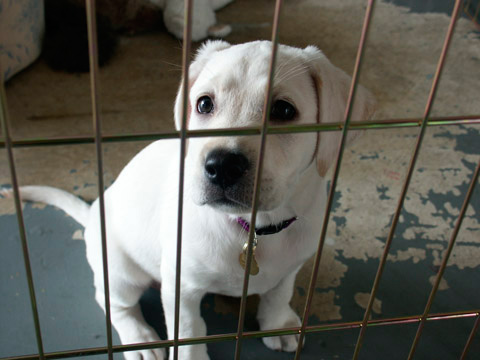
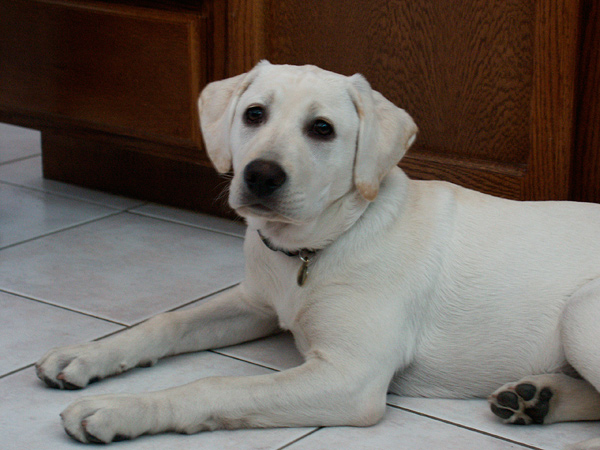
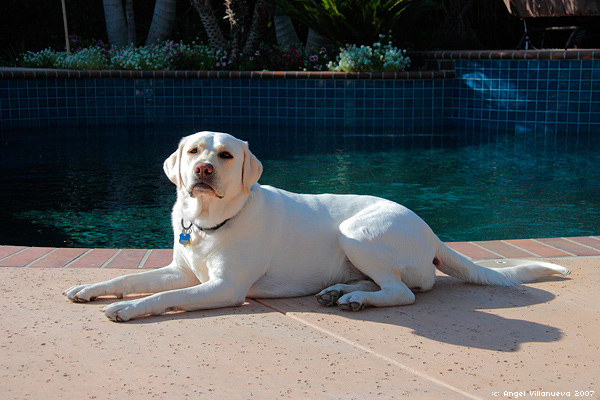
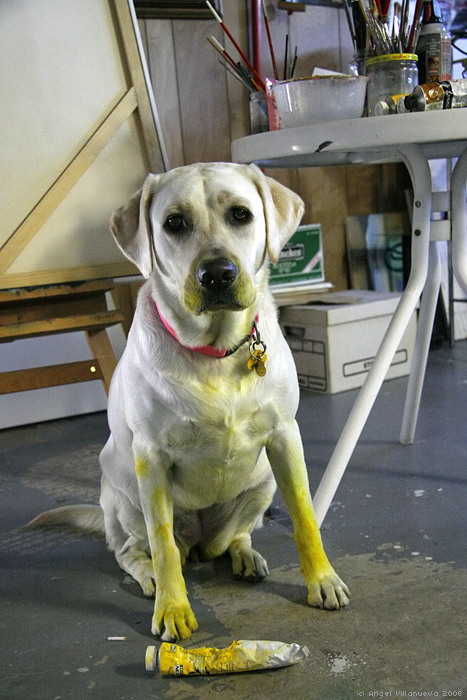
On September 9th 2010, Rose, my Labrador Retriever, passed away. She was five years old.

In a way, it was good to be in a distant city when I got the news. Not surrounded by the familiar, I could go about my day bearing the standard of grief without having to explain myself. I could walk the streets at night under a light drizzle, letting the fresh water from above mix on my cheeks with the salt water from within as others hurried past me busy with their lives. I could, as I do, turn inside for answers and not worry about the external world being an encumbrance to the process.

Weighing heaviest on my heart was not being there. Rose was sick before I left for Europe, but we did not know what it was or how bad it was. The different vets who saw her were stumped by her symptoms, which seemed to respond favorably to treatment for an allergic reaction. The cancer diagnosis came too late, at a moment when I had no way of being in touch. Steve, my partner, had to go through it alone, watching Rose quickly fading and helping her to fight in every way he could think of. I know she was well taken care of, yet a part of me wonders if she felt abandoned, if she waited for me as long as she could. I wish I had at least been able to say goodbye.

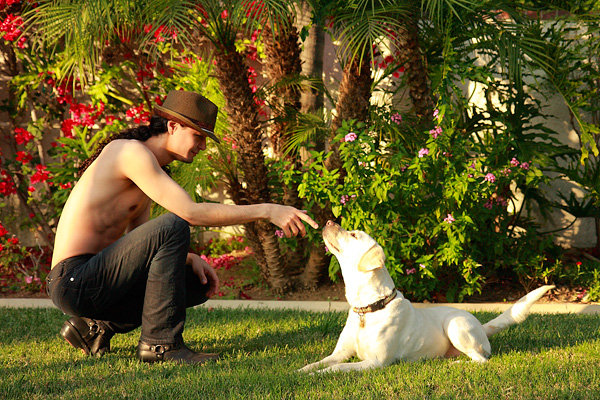
Rose came home as an eight-week old puppy one eventful afternoon in July of 2005 and immediately became part of a happy triad: Steve, Angel, and Rose. She was family, an integral part of daily life, complementing our existence in ways that only a friendly and loving animal can. For five years, raising and sharing a life with Rose gave Steve and I a joyful common purpose and brought us closer together. She was a gift: free-spirited, tirelessly playful and curious, always excited about new things, places and people, and possessing of a fixity of purpose (finding food!) I have yet to construct for myself about anything. She kept us company when we were away from each other, brightly colored our day-to-day activities and even helped to keep us healthy by having to walk her for miles every day lest she be restless at night and keep us awake. Rose was a living anchor to the good in life, and we were in turn happy to be responsible for the life of an animal friend.

To me, Rose also functioned as an expansion of my mind, extending my cognitive reach into the animal world. She was my experiential bridge to a realm of perception and living otherwise closed off; a constant reminder of the fact that the human experience is but a fragment of a larger reality. Rose showed me that as sentient beings, humans and animals share commonalities which can uphold a kind mutual understanding with surprising ease.

In April of 2007, I had a strange apocalyptic dream in which Rose, then two years old, came to me during a moment of tremendous duress which just happened to take place amidst the ruins of my college campus. Considering the pressure of school at the time, the dream reads like a metaphor for salvation, an act which, in more than one way, this singular creature in fact carried out for me.

There are brands of conviction that place animals on a value scale in which they are considered lesser creatures, different and separate from us, granting adherents the liberty to distance their self-concept from animal identity as far as they wish. I find this appalling. The insight into the fabric of nature we have so painstakingly obtained through scientific study indicates clearly that humans are not simply Masters of the Earth, alone in our comprehension and privileged in our superiority. Being the first species to acquire the power to change the biosphere at will while remaining dependent upon it places us squarely in charge of maintaining its delicate balance. In this sense, we are deeply indebted to the species who have chosen to become our friends, for they are a reminder of our intrinsic connection to the rest of life. To the extent that we separate ourselves in identity, thought, and action from the animals, we become less and less.

A Short Walk Down Memory Lane


Baby Rose, Sleepyhead…


Time out for a rambunctious little girl.


With Steve in the family room.

Growing up.


Graduating from puppy school.


Still thinking she’s a tiny puppy.


In the pool with Natasha.

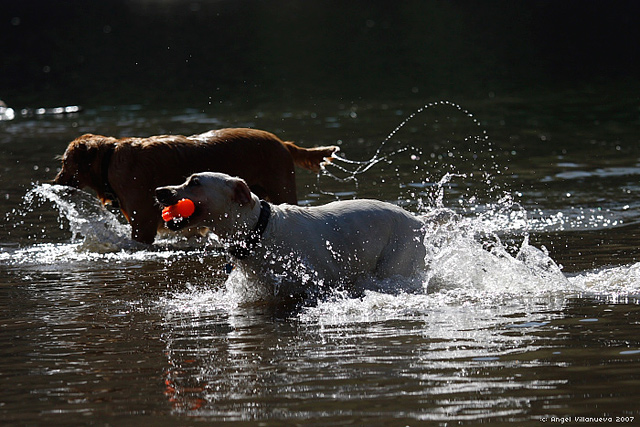
Fun with friends at the lake.
(Click here for full photo essay.)


Survival instinct at work: taking to the water during the brush fires behind the house.
(Click here for the photo blog of that event!)


Full Winter Coat


One day I came home from work to find that Rose had been busy making art out of herself… and the house! She was about a year old here.


With me in the garden.

And so, dearest Rose, Steve and I bid you farewell. Though we will always wish you hadn’t left us so soon, we are grateful for the wonderful time we spent together and all the joy you brought us. Thank you. We hope you had a good life, that your needs were met, and that you were as happy with us as we were with you. We loved you. You will always be a star in our sky.

Paris, France
September 30, 2010

“We send our thanks to all the Animal life in the world.
They have many things to teach us as people.
We are glad they are still here, and we hope it will always be so.”

The Mohawk Thanksgiving Address


The Seal of God

Posted in Dreams, Journal Entry, Writing and Poetry on July 9th, 2010 by Angel Villanueva

:: :: ::

I happen upon the nest while surveying the devastation inflicted on the farm by the storm. The nearly uprooted tree is tilted enough that the nest, miraculously spared destruction by the tangled mass of broken branches around it, has come to rest just above eye level. Sitting in it, frightened and cold, is a lone baby rabbit.

I reach in and grab it gently, the tiny creature barely fidgeting, fluffing its fur and immediately cozying up to the warmth of my cupped hands.

“Where are your brothers and sisters?” I ask as I begin walking.

“They were taken by the big bird. Biiig, scaaary biiird… Oooh…” He trembles, no doubt reliving the abduction in his mind. Cute and helpless become dismal adjectives.

“How come it didn’t take you?”

“Because I’m different. Because I’m special.” He sounds quite sure of himself.  “See how tame I am? If you look into my eye, you will see in it the ineffable Seal of God.”

Worth a look. I raise him up to my face and amplify the image of his eye. The effect is that of riding a meteor as it approaches the atmosphere of an alien planet, the round of the cornea glistening in the light of space and flattening as I come closer and closer upon the brown wrinkles of the iris. The iris expands to form a mountain range surrounding a circular lake, Lake Black Pupil, resting beneath the beautiful bluish transparency of an airy surface marred only by… What? A little cloud…?

The seal is an oblong, translucent, iridescent shape floating on the cornea and surrounded by progressively fainter concentric rings. A gentle tilt reveals all the colors of the rainbow dancing within it; a subtle, exquisite, ever-morphing composition.

“I see it! It’s there!”

“I told you.” He asserts.

“So… What do I do with it?”

“Oh, nothing. You can’t do anything with the Seal of God. You can only look at it. And it’s everywhere. As a matter of fact, I used to have it on one of my buttocks.”

He pauses, becomes absorbed. Conjuring up the memory of a different body sets off a process of awakening, the little animal vessel stiffening up as he slowly begins to understand his new condition.

“How long has it been since my life?”

A breathless question.

It’s then that I recognize the voice. Of course. I’ve come across this spirit before. I have access to his records, and begin going through them in the back offices of my mind. The images in his file are of a white man in his late thirties or maybe early forties; a pleasant face with longish, straight brown hair. The last picture shows him looking quite tired in his blue hospital gown.

“Seven years.” I whisper it to him, no need to shock him any further.

He’s frozen in my hands, trying to come to terms with what he cannot understand.

“Oh, David…”

We have reached the farm house, and I set him down in the cage where I will keep him until he can take care of himself. I know that as soon as I utter the next phrase he will lose his memory and capacity for speech, but I utter it nonetheless. I have to. It’s my job.

“You are a rabbit now.”

:: :: ::

Dream Journal, July 9, 2010

The Capital

Posted in Dreams, Journal Entry, Writing and Poetry on June 18th, 2010 by Angel Villanueva

:: :: ::

“Why do you always look at me like I’m not real?”

Rather than answering I look out the restaurant window at the people pushing bales of hay up and down the street. The air between us has frozen solid, plastic toys and an old shoe are suspended in it. He says something else but I can’t hear it over the thunder of the waterfall at my back. I look down the sheer cliff, an immense drop to a pool of dark water furiously beating itself into a foam. My chair is at the very edge of the rock and the rock is wet, but I will not fall. I’m safe. Overspray moistens my face. I like it. Maybe I’m thirsty. I look at him again. Now he wears a silken hood over his head and is eating soup through it. How clever, I think. He lifts the spoon to his lips, the hot liquid goes through the fabric and into his mouth, cooling down in the process. He takes the hood off. His head is now a giant cigarette.

They call the door “The Egyptian Eye,” though it is not really a door nor does it look like an eye. A natural split in the rock wall, which the monks put an iron gate on long ago, hides in shrubbery by the side of the road. If you know about it, you come to it, shake the gate, and wait for the wordless monk. If he comes, reading you from the inscrutable darkness of his cloak, he may or may not let you in. Once in the garden you may get lost, as there are often fields of wheat taller than a man, and negotiating the narrow pathways threaded through them requires labyrinthine skills. From the esplanade beyond you can see the Capital, something of a medieval ziggurat, a massive rock complex  sitting squarely upon the Earth and boldly reaching skyward. The stairs are tricky, they look like one could fly up them, but they’re yet another laborious maze weaving in and out of the ornate facades. Up on the rooftop, you grab a chair and wait for things to be set up.

Five men dressed in red take aim at the bullseye painted on the man’s bare chest. He is strapped to a chair and they’ve put a bag on his head. “Fire!” The rifles bark in unison, a dull, muffled cough. The man’s chest bursts like papier-mâché, a cloud of fiber shreds swirling about him. He trembles briefly, starts falling sideways. The restraints hold him. Dead now, the men immediately begin disassembling the display. One of the reporters is sick. “He moved. I saw it. I didn’t want that.” So they’ve killed two men, the one in the chair, and the one who will now live with the memory of a sloppy execution.

:: :: ::

Reading the news before bedtime will do some strange things to your dreams.
I don’t think there is an absolute answer to the question of capital punishment, but I do believe that on a case-by-case basis there should be no room for ambiguity.

~A

:: :: ::

Cognitive Archaeology

Posted in Dreams, Journal Entry, Writing and Poetry on March 9th, 2010 by Angel Villanueva

:: :: ::

Late summer, year unknown. We were on a walk through the countryside, a leisurely trek under the luminous twilight after sundown. The road was flanked by dense trees of a dark emerald, homes nesting between them with  increasing frequency as we got closer to town. At times, glimpses of grassy hills beyond the forest led up to great purple mountains in the distance.

Striding confidently beside me was a longtime friend. He was a delight to be with as always; cultured, intelligent and congenial, a dashing presence not of our time. His fine, formal attire (pin-striped trousers, tail coat, top hat, immaculate white gloves) was as naturally becoming to his graceful, athletic frame as was his handsome face.1 We were talking about our plans for the rest of summer when I stopped, in utter disbelief, before the house on our left.

“This is impossible… I lived in this house when I was a child!” The shock had turned my voice into a whisper.

Before us was an abandoned adobe building, a single-story row of doors and windows spanning half a block before turning the corner. The very first unit—one door, one window—had been my home, a place my mother rented for about a year when I was little. It was still the only part of the building painted a sickly pink, the color an incongruous touch on a facade of an otherwise uniform, dirty white.

I walked up to the door and pushed it. It was unlocked, yielding open without effort or sound. I stepped inside, surprised by how small the space seemed now. The two rooms, connected by a doorway, were empty. It was evident from the dust and debris accumulated on the floor that no one had been here for many, many years. The door to the back patio was missing, and through that opening I could see what was once an outdoor kitchen, the adobe forms long eroded by rain and neglect into shapes barely recognizable as a wood stove and bread oven.

My 18th century companion leaned on the doorway, observing me gravely. He had taken his hat off and was slowly turning it in his gloved hands, strands of wavy blond hair now framing his face. He looked uneasy. I was too. It felt as if we were carrying out a desecration the moment I opened that door.

“These rooms are still haunted by that memory” He said.

I nodded. They were. The setting was home to my earliest memories of terror: my mother fell seriously ill for the first time while we lived here. I was six years old, and the place was said to be haunted then. It certainly was now. There was a strong, nauseating energy latent in it. The atmosphere felt dense, laden with something old and ill, something of death, an enduring, sad and immovable presence indifferent to our trespass but powerful as a curse. I feared this unctuous malaise would permeate my clothes, my skin, my body… that it would cling to me like an invisible madness and pollute the rest of my life. We had to leave.

Then, as if they had suddenly materialized, I saw the paintings.

Three framed oils on canvas, painted in the French realist style, hung on the walls of the first room. I had no conscious recollection of them until now. It all came flooding in, faster than I could process. The paintings had been there when we moved in, and were obviously far older than my memory of them. Whoever hung them placed one by the entry, one on the wall that separated the two rooms, and one by the door leading to the backyard. We never touched them, and evidently, no one else had.

“I can’t believe this… hanging, unseen, for decades…” I spoke quietly, absorbed. I turned to him. He held my gaze. We both knew, in that moment, that I would be taking the paintings with me.

The pigments had faded a great deal, but overall the images were well preserved. The frames were nailed directly to the stucco. A strange way of hanging paintings, I thought, as if the intent had been to crucify them.2

I carefully began to pull the first one from the wall. It was a bust portrait decorated with an oval mat. The sitter was a pale woman in a white blouse, her red hair pulled up about her head. Her gentle expression barely managed to balance the otherwise somber tone of the painting. She must have been in her late twenties when the portrait was made. Who was she? I wondered. The frame felt flexible, soft almost. The nails gave up easily, shedding bits of rust as they came out. I leaned it against the wall.

The next work was a small view of an old city, a patchwork of roofs, walls and cobblestone pathways. The town looked deserted. The picture seemed to have been painted from life, and the composition was strict: were it not for its painterly atmospheric depth and the rich detailing of its surfaces, it would have come close to geometric abstraction. It came off the wall easily as well.

The largest of the three paintings—and oddly for my taste, the one that fascinated me most—was a countryside view painted in thick impasto. Its execution set it apart from the other two: a hint of expressionism had made its way into the brushwork, with paint volumes accentuating forms and adding a contained dynamism to the stillness. In it, the dark brown planks of a wooden fence contrasted with the faded olive green of a grassy field behind, leading to a dark tree line beyond. Part of the horizon was visible, and in it, the faintest suggestion of a town under cloud cover seemed to tremble with the murmur of distant events. The frame was broken in places, I feared it would fall apart in my hands, but it held together as I pulled it from the wall.3

In the awe of the discovery, numbed by the unsettling atmosphere of the space, and fighting off the rising pain of memories unvisited for ages, I sought to understand the origin of these images; I felt it was my duty to do so before taking them—I felt the trespass warranted it. Someone before me had understood and kept them together. It was my turn to do the same.

What did these pictures have in common? They were obviously contemporaries and related to each other: depictions of a town, its countryside, and perhaps one of its residents. Although varying in approach, the brushwork and color palette suggested the same hand. Who painted them? When? Where? No signatures. No dates. Beautiful paintings marred by a lugubrious heaviness, the silence of loss.

Loss… The realization swept my mind like a tidal wave: The paintings were made after the plague. The portrait of the woman was posthumous.

Narratives began weaving in my head. I could only imagine the countless stories of pain and horror behind these images. They made sense. Perfect sense. I couldn’t bear to think about it any longer, not there, not in that place that was now more than ever a tomb in my mind. I stacked the paintings on each other and put them all under my arm.

“The plague…” He said as I turned to him. “I think so.” I whispered back.

On the walls, white rectangles of emptiness punctuated by stigmata screamed of undead nightmares.

“Let’s go.”

It felt good to get back on the street, out the ill atmosphere of the abandoned house. We walked briskly, our steps in sync. Interrupted by the archaeological find, our carefree dynamic could not be resumed. Its place had been usurped by the silence of complicity and a nameless, insistent concern. I couldn’t wait to get to my car, to put the paintings in the trunk, to shut them in the dark. I feared them. I feared that it was they who created the horror I felt back in those rooms, rather than being mere witnesses to it. They were alive with that sick energy and I had begun to realize it was a force that could not be contained or escaped from. I didn’t know what I would do with them.

I wanted to thank him for being my accomplice in the theft, but then I thought: Is this really a theft? I wondered if anyone had seen us. I wondered, strangely, if there were cameras monitoring the area, if the removal of the paintings had been recorded from a distance. Stranger still, I wondered if my handsome friend would even show up in such a recording.

We walked on, past the gates, into the city.

:: :: ::

1. I often wonder who these characters are who visit me in my dreams. The man in this sequence was not dressed in costume; those were his usual clothes. He made me think of the high society of early America. In the dream’s internal logic, I remembered him; we talked as if we had known each another well for a very long time. Perhaps he has been a recurring character for a while and my memory of him is crossing into daylight for the first time. Who knows? I do not recall a name.

2. Hanging is also an execution. Like the limp body of a dead criminal hanging at the square, paintings on display are captures and examples at once.

3. The first thing I did after documenting this dream was to call my sister in Mexico. I asked her if she remembered that house, if there had been paintings in it. She remembers the place but can’t say whether there were any paintings. She was four years old when we lived there, her memory of the place is much dimmer than mine. She does, however, remember the stories about the haunting.

What is haunting to my mind is how vividly I remember the pictures. They have the distinct quality of an unearthed memory; it’s hard for me to think of them as an elaborate invention of the subconscious. I could reproduce them easily. Fear of awakening something I may not be readyor ableto deal with, and perhaps remaining figments of superstition in my otherwise empirical mind, prevent me from even trying.

It was at that house that I created a painting for the first time. I received a set of watercolors as a birthday present from my mother when I turned seven. It would make sense, if these paintings existed, that I would have been inspired by them somehow.

The building was demolished many years ago. My mother, the only person that would have been able to instantly demystify this dream, has not been with us for a long time.

Thank you for reading.

~A.V.

Never Mind the Fool

Posted in Impressions, Journal Entry, Writing and Poetry on February 15th, 2010 by Angel Villanueva

:: :: ::

Senator Martin went in looking good. Her navy suit breathed power. She had put some starch on Gossage too.

Dr. Lecter sat alone in the middle of the room, in a stout oak armchair bolted to the floor. A blanket covered his straitjacket and leg restraints and concealed the fact that he was chained to the chair. But he still wore the hockey mask the kept him from biting.

Why? the Senator wondered. The idea had been to permit Dr. Lecter some dignity in an office setting. Senator Martin gave Chilton a look and turned to Gossage for papers.

Chilton went behind Dr. Lecter and, with a glance at the camera, undid the straps and removed the mask with a flourish.

“Senator Martin, meet Dr. Hannibal Lecter.”

Seeing what Dr. Chilton had done for showmanship frightened Senator Martin as much as anything that had happened since her daughter disappeared. Any confidence she might have had in Chilton’s judgment was replaced with the cold fear that he was a fool.

She’d have to wing it.

A lock of Dr. Lecter’s hair fell between his maroon eyes. He was as pale as the mask. Senator Martin and Hannibal Lecter considered each other: one extremely bright, the other not measurable by any means known to man.


The Silence of the Lambs

Thomas Harris, 1988

:: :: ::

Who hasn’t had a fool in their lives? In their desperate search for validation, these characters will command all they can, which on occasion will include our presence. But never mind the fool: in and of himself he is inconsequential. Sure they meddle and complicate things, and make no mistake, they can be destructive, but chaos is order ineffable: in facilitating encounters of all sorts they act as the catalyst for change. Much can be gained from being drawn from time to time to places where rules—particularly ours—are being broken. There, a great experiment is carried out both on our behalf and in spite of our efforts to stop it. The mistake most often made when wandering into a fool’s reach is attempting to draw conclusions from the experience before it’s time.

As for the fool himself, not much can be said other than everyone’s fares to the chaos are charged on his account. In The Silence of the Lambs, Thomas Harris does us a sinister, yet amusing service, delivered perhaps more satisfyingly by the film than the novel. Chilton’s ultimate fate is our guilt and pleasure, leaning to the latter as it hints at a tantalizing possibility: a particular life form may experience a great deal of injustice during its existence, but the universe, in the end, balances itself out quite nicely.

With that thought, I leave you. I’m having an old friend for dinner…

Ta,
Angel Villanueva

:: :: ::

:: :: ::

Notes on a Vampire

Posted in Dreams, Writing and Poetry on January 24th, 2010 by Angel Villanueva

:: :: ::

There once lived a creature in the woodlandsome say a manwho lured children away from their adventures, and drowned them in a well. Hidden amidst the trees, it would watch as the villagers gathered for the mournful task of retrieving the lifeless little bodies from the cold darkness that claimed them, out into a sunlight cruel in its insistence on exposing every detail of the horror. It followed the trail of their grief to the cemetery, taking great pleasure in their rituals, in their attempts to cope with what couldn’t be coped with, the unjust passing of their innocent. For it was not the death of children that it sought, but the waking death of those who grieved them: its soul fed on the sorrows of the living.

::

Undead
You surface once again
But I have known you

You call your works the Children of the Spring
Children drowned
At the bottom of a well

Walk on
Spare me the vacuous inquiry of your stare
The treachery of your touch
The mimicry concealing rigor mortis
Of your signature approach

Spare me the tentacles of your deception
Spare me the righteousness of your reproach
The slithering dance of your tongue
Weaving a dazzling patchwork out of lies

Spare me the tedious record of your anguish
None for the better
The bait and switch
The concealed clockwork diligently ticking
Beneath the outward good of your intention

Spare me the horror
The murder of what’s good in those around you
You are a death heavier than any other
An end before the end

Cartography
The only cross I can lift up against you
The charting of a path which won’t cross yours
Is held up high

I know the blood of pain you cannot do with
Your talent is but one
To live from agony
Now let
The agony you live from
Be your own

Spare me the silent aggravation
Of witnessing your plunge

Back I say, back!

::

No longer hiding in forests, swamplands, or caves, today these creatures live in our midst, roaming the land in search for the child in us. In them lives on a predatory hunger, an urge that saw its dawn in a time long before ours. The one incantation holding sway against their lurid powers is distance.

Stay away from them, children, stay away…

~A.V.

25 Things About Me

Posted in Journal Entry, Writing and Poetry on August 5th, 2009 by Angel Villanueva

:: :: ::

1. I was 11 years old when I understood, in its full magnitude, the burdensome paradox of having no foreseeable desire to listen to others yet always having to live in their world.

2. I am sometimes afraid of the places where my mind goes—self destruction lurks in the shadows. I’ve put measures in place to keep that in check but the knots slip at times. I fear madness may be in my future.

3. Ominous as that sounds, the mind ventures in the opposite direction just as frequently. I have moments of intense illumination that leave me absolutely breathless, to the point that it is difficult to reconnect with my immediate surroundings at will. I hope and pray something like that doesn’t catch me while driving a bus full of people.

4. Life as a flatline is not something I’m interested in. That doesn’t mean I’m committed to going out on a limb to provide myself with thrills at the expense of others (though I’ve been guilty of it, and I regret that, I truly do). What it means is that I strive to experience as much of the spectrum of human existence as my time and capacity will allow.

5. Yet I wish I never had to sleep, eat, talk, have sex… I wish I could exist as a disembodied mind with the ability to see and transform matter, so I could focus on what I’m here for.

6. I have an undying love for the beauty of the desert.

7. I wish I had discovered Ayn Rand as a teenager…

8. …because I understand reality as something that exists independently from the mind. Moreover, I think ultimate truth (the structure of things) is a multi-level, multi-dimensional affair, its reach spanning far beyond our perceptual and cognitive bandwidths. Short of the Einsteins of our kind—whom are/were limited in their own way—most of us can at most aspire to deal with aspects, dimensions, fragments of the whole, which is a recipe for eternal confusion, conflict, and suffering.

9. I am happiest when I’m thinking, alone, and figure something out.

10. I have more art projects in my sketchbooks and notes than I could possibly accomplish in a lifetime.

11. I am well aware of the fact that some (sometimes relevant) people find me troublesome and contradictory, as if undefined or not-quite present. I simply have no reliable way of sharing my internal structure, and fear that even if I could they wouldn’t understand.

12. My particular brand of wicked humor has connected me (personally) with more people than anything else about me.

13. I’ve explored self-perception issues by obsessively photographing myself nude in all sorts of settings… I’ve gotten some interesting results out of that but have yet to decide what to do with the images.

14. Because I think images, in that sense, are ultimately a cop-out.

15. I’ve internally declared war on various causes, systems, and people over time, but get bored halfway through the effort and never carry it out.

16. I think of knowledge as something to be consumed.

17. My hatred for television peaks anytime I’m exposed to Latin American telegarbage.

18. I find it easiest to be friends with people I admire in some way.

19. I find it easiest to love people who share their processes of self-discovery and self-creation with me.

20. My life unfolds in 11-year cycles. I took possession of myself at 11. It was like waking up. That’s how I divide my life now: pre-11, post-11. 22 was quite the year as well. I think I know exactly what will happen at 33.

21. When I was 12 years old, my mother fell ill and could no longer take care of us. This is how I learned to cook, iron my clothes, etc. Today I can iron a dress shirt in 90 seconds (I’ve timed myself!).

22. I used to create land art as a child, using rocks, twigs, and earth. I didn’t even know there was a term for it, or that anyone would care to see it. I just wanted to put my signature in the land, to bring an element of creative order to it in some way.

23. I grew up in rural Mexico, in the Baja California desert. We lived for years without electricity or running water. My grandmother had a water pump in the patio. Shoes were something we would only wear to school. In the summer I worked picking cotton or harvesting grapes in the fields, along with other kids from my school; I remember it was grueling work under a merciless sun, but also a great deal of fun. People bartered food and services all the time. We used to get citrus fruit, cucumbers and fresh milk from nearby farms. We always grew our own chickens and often harvested wild plants to eat. Life was a day-to-day survival process that required a direct connection with the land and the people around us. For all this, I am grateful. I cannot imagine what sort of dull creature I would have become had I grown in the urban conditions that are known to me today. I cannot imagine life as a child without that great open sky, nights ablaze with stars, the riverbank, and the creatures whose secret lives I came to know. To me, civilization was a set of human dwellings that could be traversed from end to end by foot in minutes… then there were the fields, and beyond, the vast expanse and mystery of the desert. I lived in an ideal world and was immensely happy.

24. This is not a ‘woe is me’ note, I’m actually quite content today. :-)

25. And, as Frida Kahlo once said: “I hope the exit is joyful, and I hope never to return.”

:: :: ::

Angel Villanueva
August 5, 2009
Claremont, CA